-
Nu.Q® Technology
Our technology detects characteristic epigenetic changes in nucleosomes that occur from the earliest stages of cancer, sepsis and other diseases.
-
- Our Tests
- Human Health
-
Nu.Q® NETs
Nu.Q® NETs is a groundbreaking CE-marked diagnostic solution that clinicians can use to detect NETosis.
-
Nu.Q® Discover
Buy our Nu.Q® Discover H3.1 Research Use Only Assay
- Animal Health
-
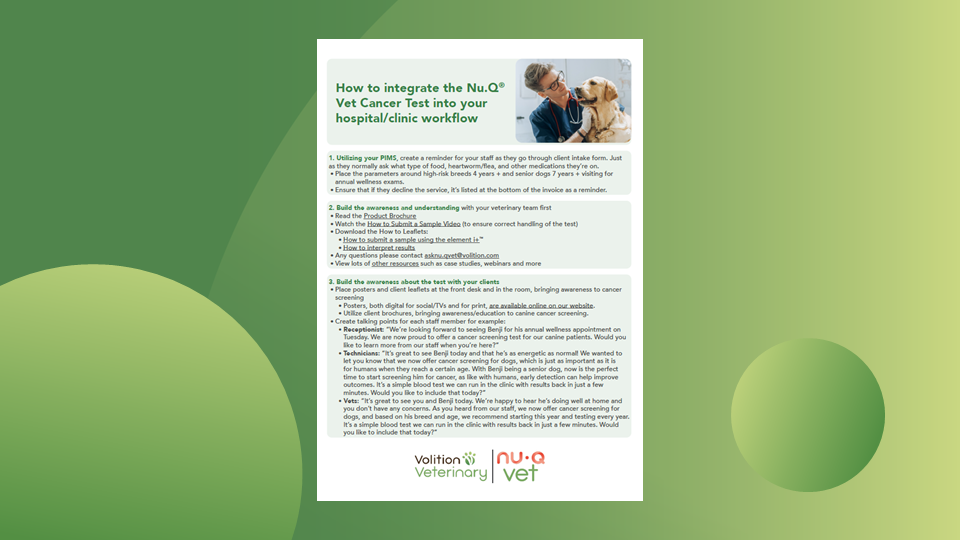
Nu.Q® Vet Cancer Test
Nu.Q® Vet Cancer Test is an affordable, accessible blood test that detects cancer in dogs.
Nu.Q® Vet Cancer Test:
Frequently Asked
Questions
Patient Eligibility for the Nu.Q® Vet Cancer Test
What species can this test be used on?
Currently, the Nu.Q® Vet Cancer Test is validated exclusively for dogs. However, we’re always pushing the boundaries of research. Do stay connected for updates on additional species validations in the future.
When should dogs be tested?
The Nu.Q® Vet Cancer Test is ideal for regular wellness checks, particularly in senior dogs aged 7 years and older. For breeds with a higher cancer risk, dogs as young as 4 years can benefit from this test. Breeds like Labrador Retrievers, French Bulldogs, and Golden Retrievers, to name a few, can greatly benefit from the preventive insights this test provides.
Is the Nu.Q® Vet Cancer Test suitable for patients with concurrent disease?
As a screening tool, the Nu.Q® Vet Cancer Test is suited for healthy, asymptomatic patients during routine wellness visits. However, it’s worth noting that certain conditions, such as immune-mediated diseases or trauma, can influence test results. Thus, when evaluating patients with recent diagnoses or those presenting unstable conditions, these factors should be carefully considered prior to testing.
Are there any medications that interfere with the Nu.Q® Vet Cancer Test results?
Based on our data, common medications such as Trazodone and NSAIDs (e.g., Rimadyl or carprofen) do not impact the test’s accuracy. However, for glucocorticoids like prednisone, may or may not affect the concentration of nucleosomes; therefore, we recommend the patient be steroid-free for a period of 7-10 days prior to testing.
For any uncertainties or specific queries about patient scenarios and drug interactions, our dedicated team is here to support you. Reach out to us via the AskNu.Q® Vet lnbox at asknu.qvet@volition.com or call the AskNu.Q® Vet Hotline at 979.709.2348.
Do pre-existing or other clinical conditions impact the results of the Nu.Q® Vet Cancer Test?
Our current research suggests managed conditions like chronic inflammation or hypothyroidism, for example, do not influence the Nu.Q® Vet Cancer Test results. It’s always recommended to consider the complete health profile of the patient for the most comprehensive understanding.
Unpacking the test: how it works and what it measures
What does the Nu.Q® Vet Cancer Test measure?
The Nu.Q® Vet Cancer Test quantifies the circulating nucleosome levels in the blood. When cancer is present, these nucleosomes, originating from the cancer cells, enter the bloodstream. Our test captures these using antibodies tailored specifically to detect nucleosomes.
Does the baseline Nu.Q® score offer any prognostic insights?
The Nu.Q® Vet Cancer Test is primarily a diagnostic tool and isn’t intended to serve as a prognostic for cancer. It’s crucial to understand that a “high” Nu.Q® score doesn’t imply advanced disease or predict a shorter survival span.
Will this test specify the type of cancer my dog might have?
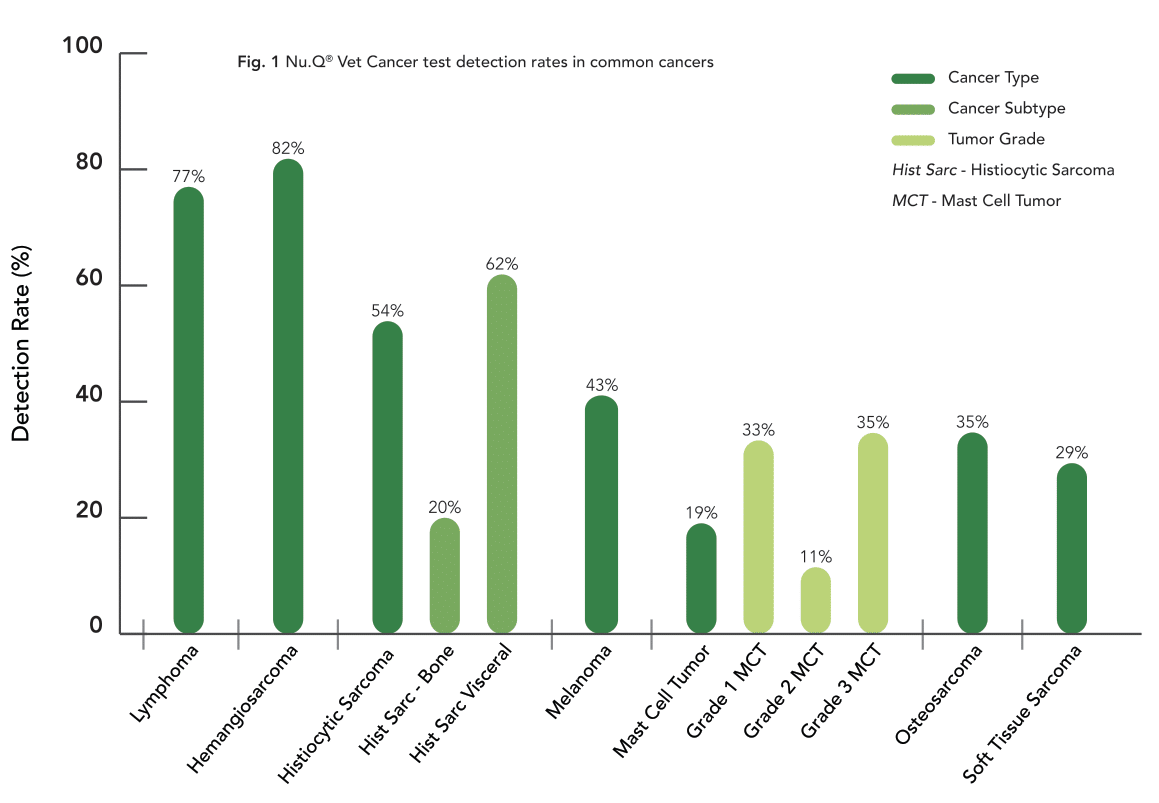
At 97% specificity, the Nu.Q® Vet Cancer Test is adept at detecting a significant percentage of systemic cancers. For instance, it identifies lymphoma at 77%, hemangiosarcoma at 82%, and histiocytic sarcoma at 54% (Fig 1.).
Research is ongoing to determine cancer type.
Before the test: what you need to know
Is there any risk to having this test done?
The Nu.Q® Vet Cancer Test is non-invasive and requires just a peripheral blood draw. This means blood can be taken from any peripheral site, including, but not limited to, the jugular vein. Giern the simplicity of a blood draw, the test poses minimal risk to the dog, and no recovery time is necessary afterward.
Getting the sample right: collection and handling
What is the minimal required volume of plasma for the assay?
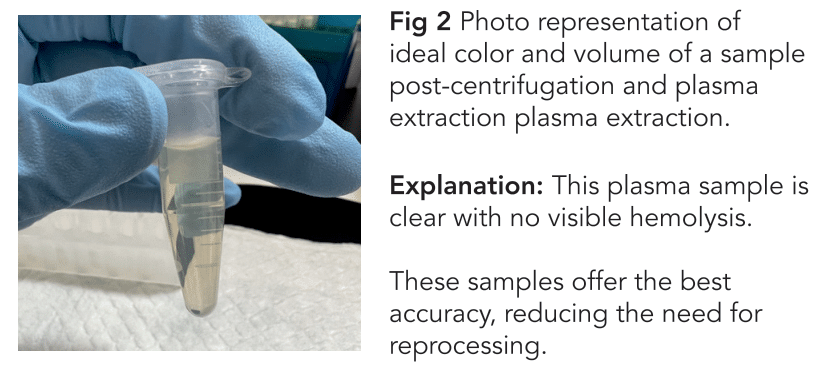
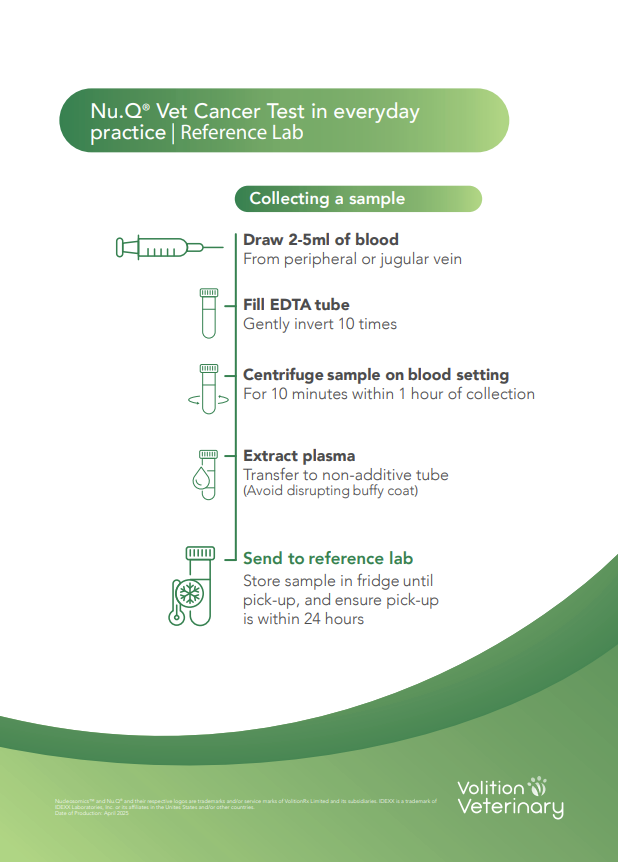
To run the assay, we need a minimum of 0.5 mL of plasma. Typically, drawing 2-5 mL of blood produces between 0.5-1.5 mL of plasma, meeting our requirements. Although we do prefer a larger sample for contingencies, like repeated assays, the baseline is 0.5 mL (Fig. 2).
What if I let the tube sit for more than 60 minutes before spinning?
Delaying centrifugation can result in artificially increased nucleosome levels in the sample. If over 60 minutes have passed since the blood draw, it’s best to collect a fresh sample. Ensure you spin it down at 1600xg for 10 minutes within that 60-minute window.
Can I use serum instead of plasma?
We exclusively recommend the use of plasma for the Nu.Q® Vet Cancer Test. Serum samples are not accepted.
What if my sample is hemolyzed after centrifugation?
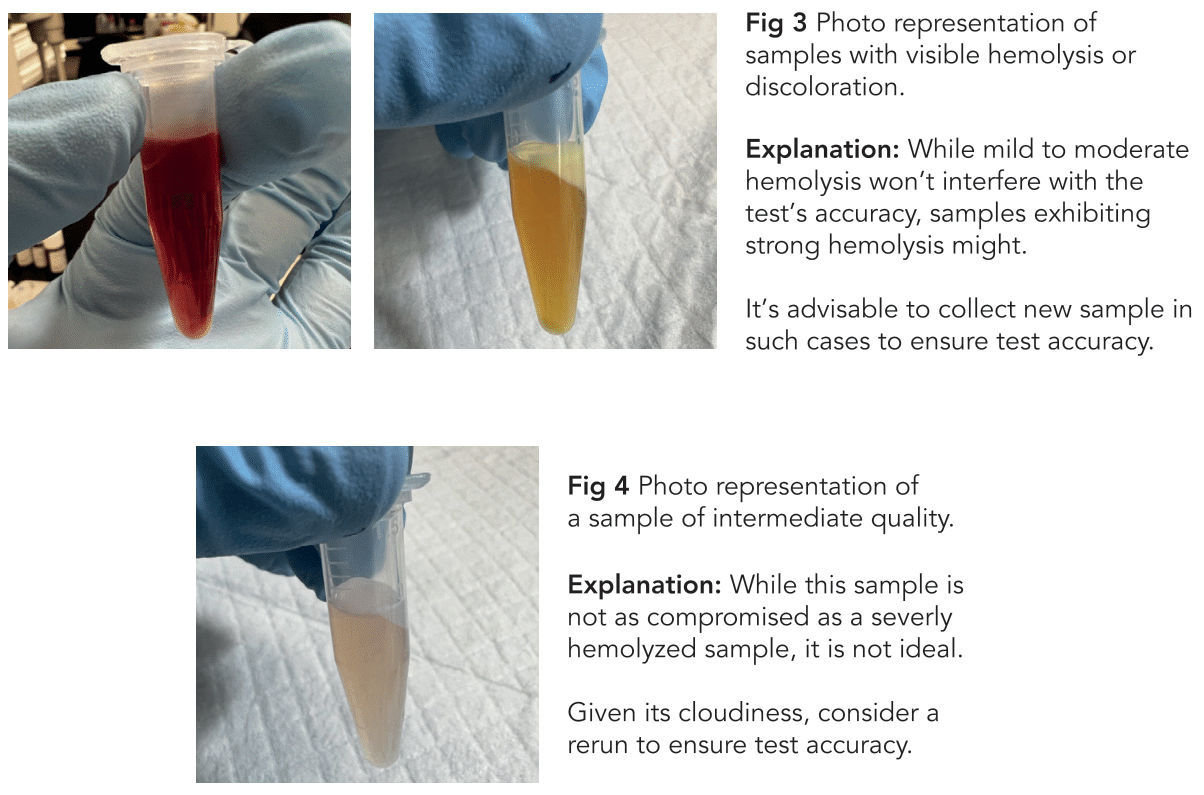
Mild to moderate hemolysis won’t interfere with the test’s accuracy. In human assays, hemoglobin levels up to 500 mg/dL showed no interference. However, for samples exhibiting 3+ or higher hemolysis, it’s advisable to collect and process a new sample (Fig. 3).
What kind of tubes can I send the plasma sample in?
Please ensure the plasma is sent in a sterile non-additive tube. Suitable tubes include red top tubes, white top tubes in come clinics, cryovials, or top test tubes.
After the test: understanding results
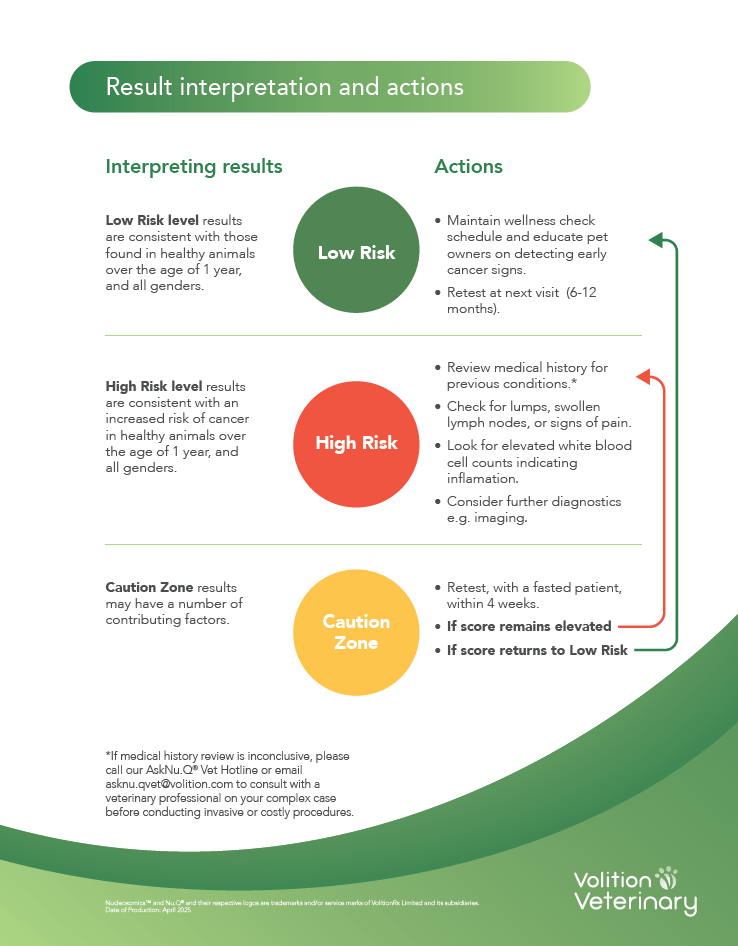
When can I expect results from the lab?
You can typically anticipate results within 1-3 days after the sample collection. However, turnaround times may vary, so it’s always a good practice to consult with your preferred diagnostic lab for specific timing. We understand the importance of timely results and appreciate your patience as we ensure accuracy in every analysis.