NETosis

Understanding NETosis and NETs

One nurse showing a framed photograph of a relative to a COVID patient.
NETs on green sepsis background
Disease

NETosis is a critical immune process where neutrophils release neutrophil extracellular traps (NETs) to capture pathogens.

Increasingly, NETosis is recognized as a clinically relevant process across multiple conditions which can be measured through the quantification of NETs.

What are NETs? As part of our normal response to a pathogen infection, neutrophils (the main white blood cell) produce a web of decondensed chromatin to trap and kill bacteria, fungi and viruses. These are called neutrophil extracellular traps (NETs).

Although NETs play a critical role in our normal immune response, some people have elevated levels of NETs which can lead to tissue damage and, in severe cases, sepsis, organ failure, and death.

Challenges

icon-microscope-blue

NETosis is a complex immune response that can be difficult to identify and quantify in clinical settings. It spans multiple diseases, and its effects often overlap with broader inflammatory processes, making it challenging to isolate and interpret.

icon-clock-blue

There is currently a lack of standardized, accessible tests to measure NETosis directly. As a result, clinicians and researchers often rely on indirect markers of inflammation, which may not fully capture NET-driven pathology or provide timely, actionable insights.

Artboard 7@2x

Without the ability to accurately assess NETosis, excessive NET formation may go undetected, contributing to ongoing tissue damage, thrombosis, and disease progression across conditions such as sepsis, cancer, and autoimmune disorders.

Improved tools to measure NETosis in real time are critical to enable earlier intervention, better patient stratification, and more effective monitoring of treatment response.

What diseases are impacted by NETosis and NETs?

acute and chronic combined

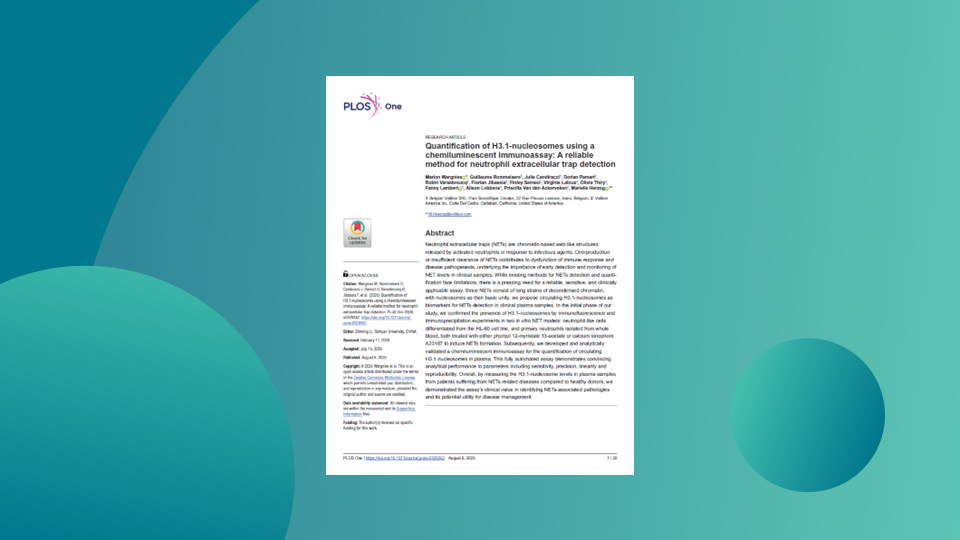
Measuring NETosis with Nu.Q® NETs

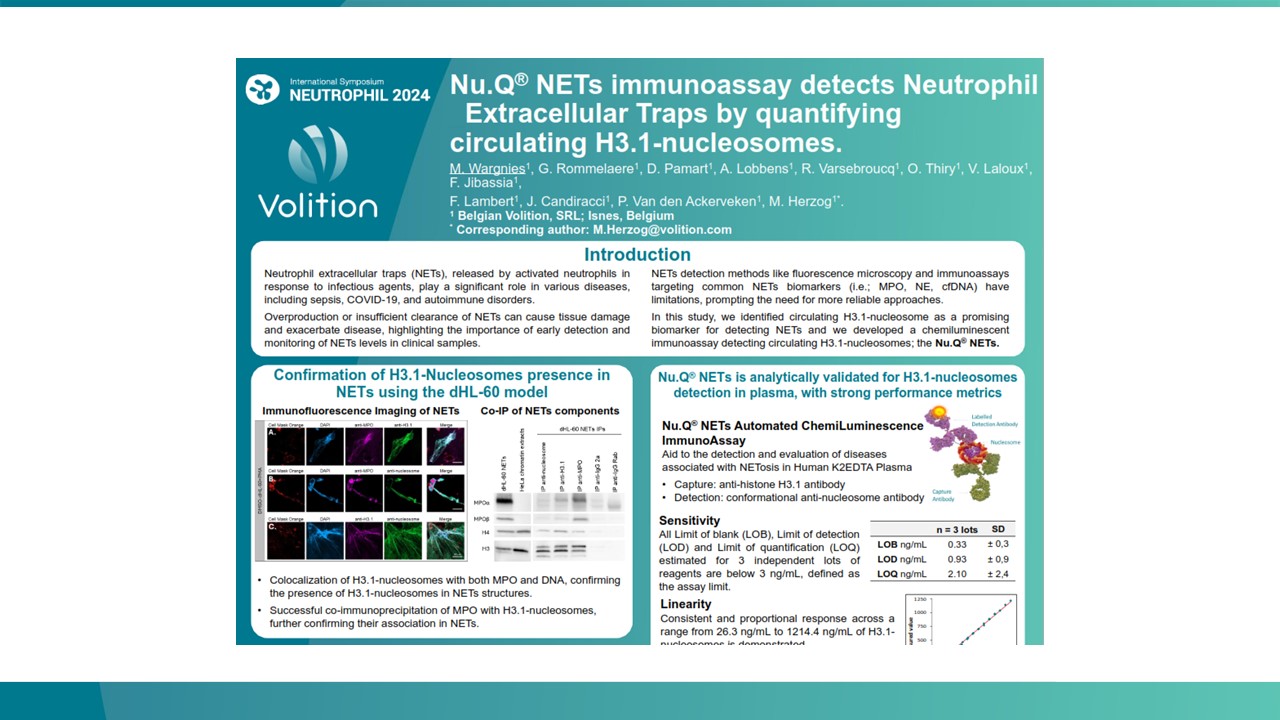
Our biomarker-driven solution, Nu.Q® NETs, enables clinicians and researchers to anticipate disease, help guide treatment decisions, and monitor patients over time, across both acute and chronic conditions, thus enabling personalized care.

Nu.Q® NETs is a blood-based biomarker solution designed to quantify NETosis quickly and non-invasively.

Learn more about Nu.Q® NETs

NET cropped
careers-feature

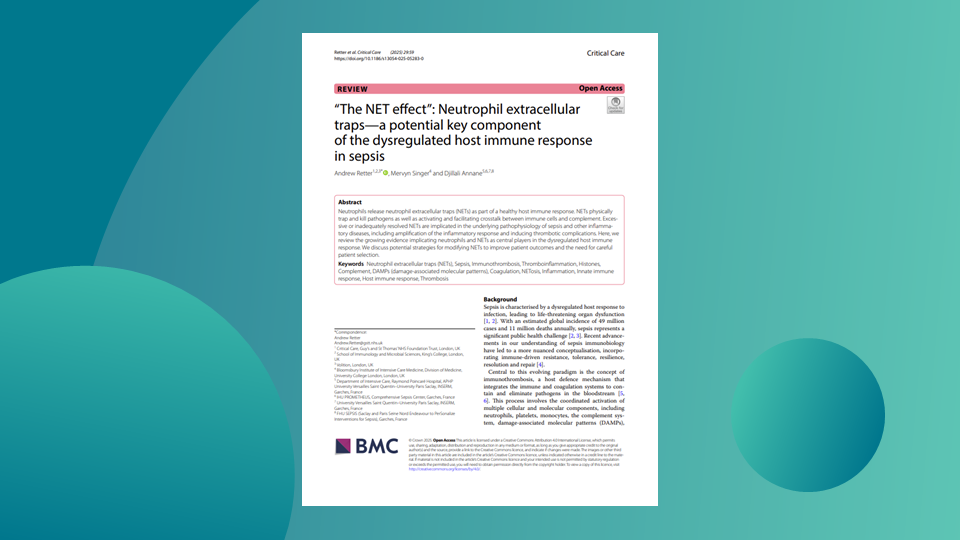
“The data from two large independent critical care studies provide compelling evidence that H3.1 nucleosome measurement offers clinicians a practical means of assessing NET formation at the bedside. It’s exciting to see evidence emerging not only in other acute diseases but in chronic conditions too.”

– Dr Andrew Retter, Critical Care Lead, UK and Medical Consultant, Volition

Nurse or doctor give man support during recovery or loss. Caregiver holding hand of her sad senior patient and showing kindness while doing a checkup at a retirement, old age home or hospital

Talk to a specialist.

Please contact our expert team for more information about Nu.Q® NETs.

Volition