-
Nu.Q® Technology
Our technology detects characteristic epigenetic changes in nucleosomes that occur from the earliest stages of cancer, sepsis and other diseases.
-
- Our Tests
- Human Health
-
Nu.Q® NETs
Nu.Q® NETs is a groundbreaking CE-marked diagnostic solution that clinicians can use to detect NETosis.
-
Nu.Q® Discover
Buy our Nu.Q® Discover H3.1 Research Use Only Assay
- Animal Health
-
Nu.Q® Vet Cancer Test
Nu.Q® Vet Cancer Test is an affordable, accessible blood test that detects cancer in dogs.
Case study: Ben, Boomer and Baxter
Benjamin, a nine-year-old Labrador, had finished treatment for splenic hemangiosarcoma when an ultrasound raised concerns about peritoneal metastasis. A physical exam was unremarkable, bar some pale mucus membranes, and, while he was anaemic, his urine analysis, urine protein to creatinine ratio and chemistry panel were all normal.
Chest radiographs were also normal. An abdominal ultrasound picked up an unusual retroperitoneal mass
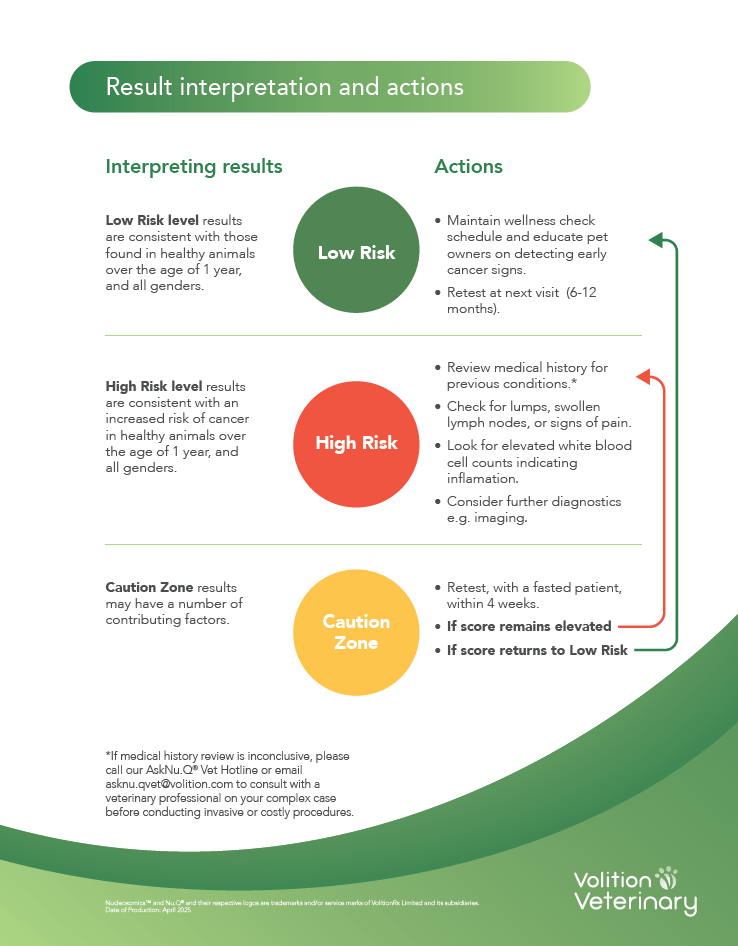
Ben’s Nu.Q® result was in the high-risk category. An aspirate of the mass was non-diagnostic.
Based on his history of cancer, the elevated Nu.Q® and anaemia, Ben was presumed to have metastasis and was started on oral Palladia.
Ben did really well for two or three months before developing vomiting and lethargy. His Nu.Q® score was higher than before, CT scans showed he had diffuse metastatic disease and he was euthanised two weeks later.
His owners were heartbroken and, two months later, they requested that their other dog, a six-year-old Labrador called Boomer, be screened for cancer, too.
To their huge relief, he was given a clean bill of health, including a low-risk Nu.Q® score.
Boomer, who is now eight, has a Nu.Q® test done at his wellness checks every six months, to keep him in the low-risk zone. He also has a new companion, a puppy called Baxter. Baxter is still too young for screening, but since he’s a high-risk breed, his parents want to add the Nu.Q® Vet Cancer test to his wellness exams as soon as he is 4 years old.